
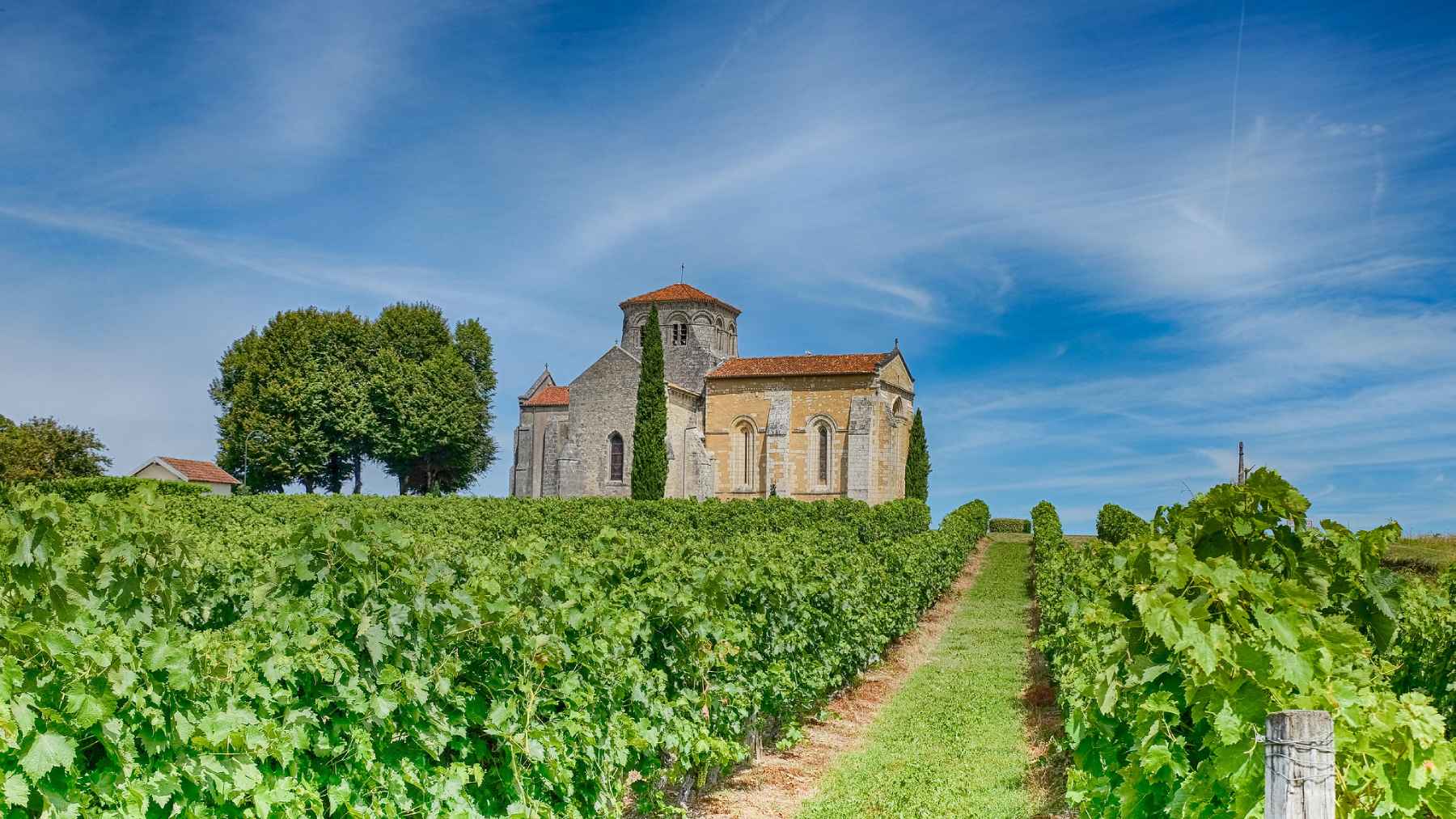
The Cognac region is in the south west of France, above the Bordeaux wine region and below that of the Loire Valley. It consists of six vineyard growth areas, called crus or terroir. Only grapes grown in this legally defined area of France can be used to create Cognac. The area covers the Charente-Maritime, a large part of the Charente, and some smaller parts of Deux-Sèvres and the Dordogne.
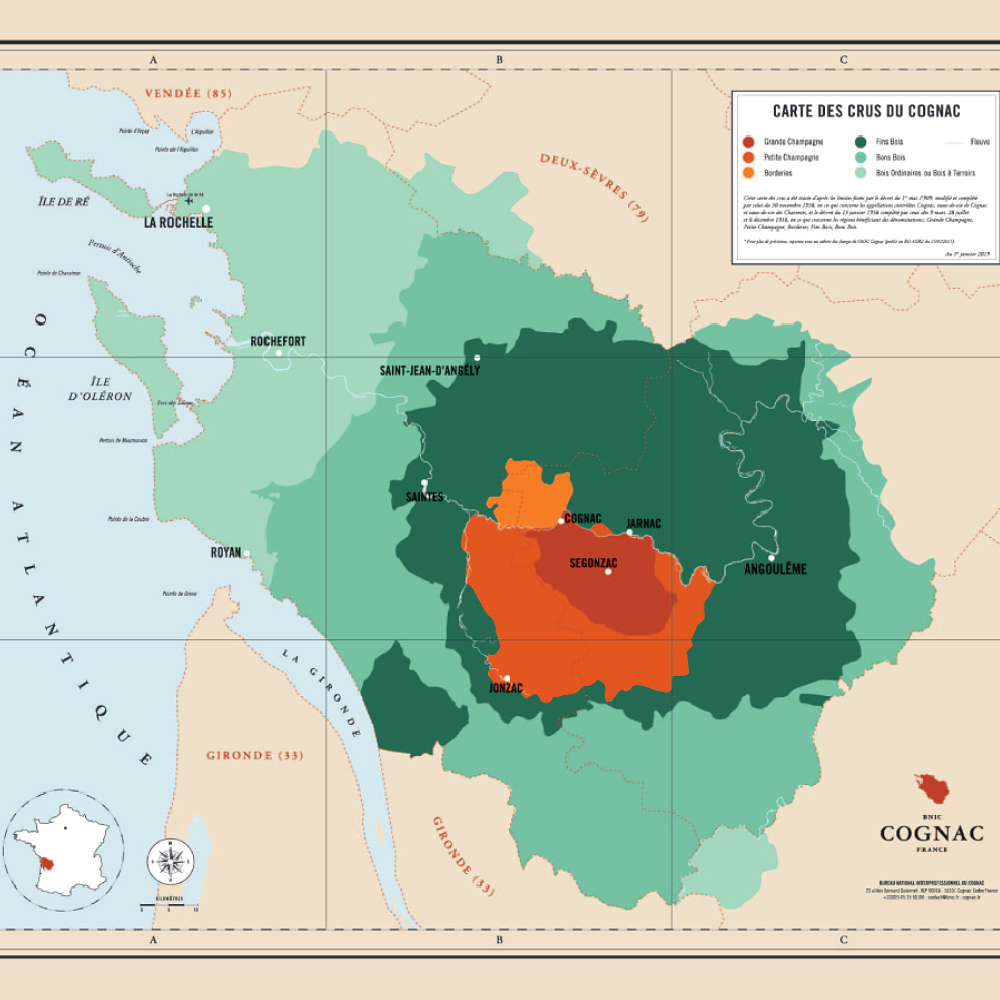
The official name for this region is the Origine Controlée Cognac (AOC) and it consists of around 79,000 hectares of vineyards (790 million square meters). It’s the second largest wine region in France, second only to Bordeaux.
Terroir, which literally means the land, earth, or soil, is a term you’ll find peppered within lots of information about Cognac. But what does it really mean? Even more importantly, what bearing does it have when it comes to making a purchasing decision?
The simple answer to that is, rather a lot. So let’s attempt to demystify what is quintessentially a French word and why, for the best Cognac experience, it really is beneficial to pay attention to the terroir.
Six crus regions: six unique products
The Cognac region boasts six different growth areas: Grande Champagne, Petite Champagne, Borderies, Fins Bois, Bons Bois, and Bois Ordinaires. These areas are referred to in many ways, such as cru or growth region. But those in the know about Cognac will always use the word terroir.
This is because terroir actually means far more than simply the land or soil. It’s a unique description that describes both the geographical AND the climatic conditions. This is very important, because both have a real impact on the grapes that grow there. The soil in each terroir is unique, and it’s this earth that nourishes the vines and grapes that come to life. Because the soils are different, so are the grapes they produce and, therefore, the wine. Naturally, these differences continue right down the line to Cognac in your glass.
The Grande Champagne and Petite Champagne regions in Cognac should not be confused with the famous region of Champagne, which is situated in the north of France. The Champagne wine region produces the iconic sparkling wine so synonymous with special occasions. Read more in our article Why is Cognac called Champagne? to understand this confusing terminology.
We should also mention another terminology that’s often used—that of Fine Champagne. This is not a separate terroir, but rather a Cognac created from a blend of Grande Champagne and Petite Champagne eaux-de-vie. To qualify as Fine Champagne, at least half (50%) of the Cognac must hail from Grande Champagne.
History, geography, climate change, and a few dinosaurs
The table below shows the approximate sizes and differences in soil type of the six terroirs. The soils in each—and indeed, within each terroir—differ quite dramatically. In one place you might find a lot of sand, but only a few hundred meters away the soil might be very chalky.
This is to do with the region’s ever-evolving climate change, something achieved over millions of years. As tectonic plates move, so the oceans encroach upon the land and retreat. This, combined with the simultaneous creation of hills and plateaus, has left a unique landscape where some areas have a high limestone content, others less so, and—in certain places—isolated pockets of chalk in an otherwise sandy or clay soil.
| Cru | Total Cru Size | Vineyard Plantation | Characteristics |
| Grande Champagne | 34 700 ha | 13 250 ha | Rather hilly, chalk soils, known as premier cru |
| Petite Chamapgne | 65 600 ha | 15 250 ha | Less hilly, chalk soild, more compact than Grande Champagne |
| Borderies | 12 500 ha | 4 000 ha | On a plateau, clay soils with flint stones |
| Fins Bois | 350 000 ha | 31 200 ha | Mixed soils: red clay, stones, and limestones |
| Bons Bois | 370 000 ha | 9 300 ha | Mixed soils: clay, limestones, and sand |
| Bois Ordinaires | 260 000 ha | 1 066 ha | Mainly sand soils, including Ile de Ré and Ile d’Oléron |
As we’ve already noted, the soils in the Cognac region are pretty extraordinary. It’s part of an area known as the Aquitaine Basin and has been formed over the millennia. The moving seas have left multiple layers of marine sedimentary deposits from as early as the Jurassic period. And yes, this makes for soils that really do contain micro remains of dinosaurs. Throw erosion and tectonic forces into the mix, fast forward 200 million years to today, and you end up with a landscape that is dominated by chalk.
In the mid 1800s, local geologist, Henry Coquand carried out a detailed evaluation of the Cognac terrain. It took over a decade to complete and was the first in-depth geological survey ever performed in the area. He was assisted by an oenologist—an expert in the science and study of making wine. Not only did their results determine the boundaries of the individual terroirs, but they also determined the quality of the wine produced in each and the best ways in which it should be distilled and aged.
Coquand also identified five specific types of soil that were best suited for the production of Cognac. We’ll talk more about these in the individual growth region descriptions below. As you’re about to find out, the production of Cognac has as much to do with the chalk content of the soil as anything else. And if you thought chalk was simply chalk, then think again, because the type of chalk contained within the soil also affects the taste of Cognac. Chalk makes soil crumbly and friable. It’s this physical property that’s so important for the grapes that grow here.
Let’s take a look at each area and terroir in more detail.
The Champagnes
The two best growth regions are named respectively, Grande Champagne and Petite Champagne. Historically the eaux-de-vie created in these regions is the most sought after and commands the highest prices. However, there has been a definite shift over recent years as consumers become more experimental with their tasting experience. For while it’s a truism that these growth regions do produce the highest quality eaux-de-vie in the traditional sense, the penchant for people to appreciate and actively seek out the unique characteristics of other terroirs is become far more widespread.
1. Grande Champagne
At a glance
- 34,700 hectares in size, of which 13,250 are vineyards
- Terrain is very hilly and the soil is predominantly composed of limestone (chalk)
- Major cities: Cognac, Segonzac
- Known as the Premier Cru
- Cognac houses within the terroir: Frapin, Brillet, Claude Thorin, Hine
About the soil
The terroir of Grande Champagne is located in the heart of Cognac regions and is predominantly made of chalk. Not only is there a lot of it, but the chalk is very pure in quality. The composition of the soil makes the growth area unique and extremely well suited to grow grapes that can be made into the highest quality Cognac.
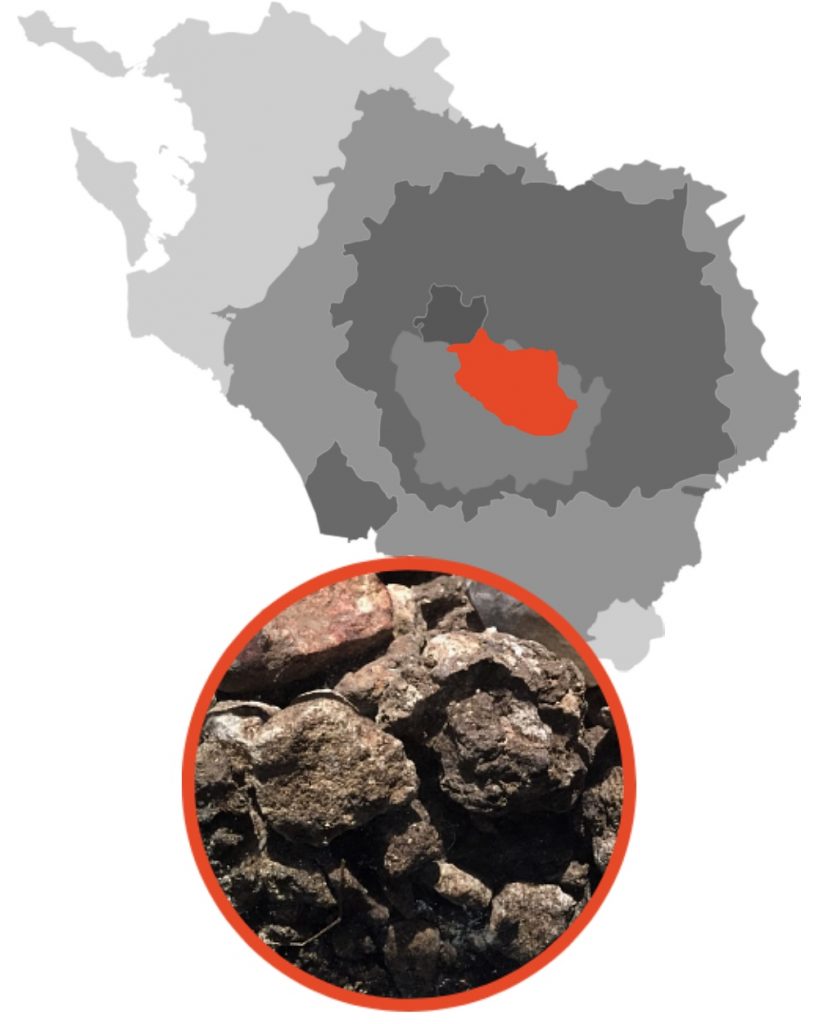
This type of chalky soil is one of the five discovered by Coquand. It’s called Campanian. This particular type of chalk lies mainly at the highest elevations of the terroir. In addition, two further layers reach surface level at other points within the Grande Champagne area. These are called Angoumous chalk and Cognacian chalk, the latter of which is found around the town of Cognac.
The high chalk content of the terroir is the product of millions of years’ accumulation of small marine fossils. One of these fossils is totally unique to the area—an oyster from the Cretaceous period, called Ostrea vesicularis.
The soils of Grande Champagne produce Cognac of extreme finesse. They are floral, light, and require extended aging to hit maturity. Some Grande Champagne eau-de-vie needs a century or more within oak barrels to reach their peak.
Discover more about the Cognacs of the Grande Champagne terroir.
2. Petite Champagne
At a glance
- 65,600 hectares in size, of which 15,250 are vineyards
- Terrain is less hilly. The soil is also predominantly limestone but more compact than that of Grande Champagne
- Major cities: Jonzac, Barbezieux
- Cognac houses within the terroir: Remy Martin, Dobbe, Montifaud
About the soil
The terroir in this region is still predominantly made of chalk but is more compact. It covers a larger overall area than its big brother, Grande Champagne. The composition of the soil means that water flows very slowly, so remains damp even during very dry summers.
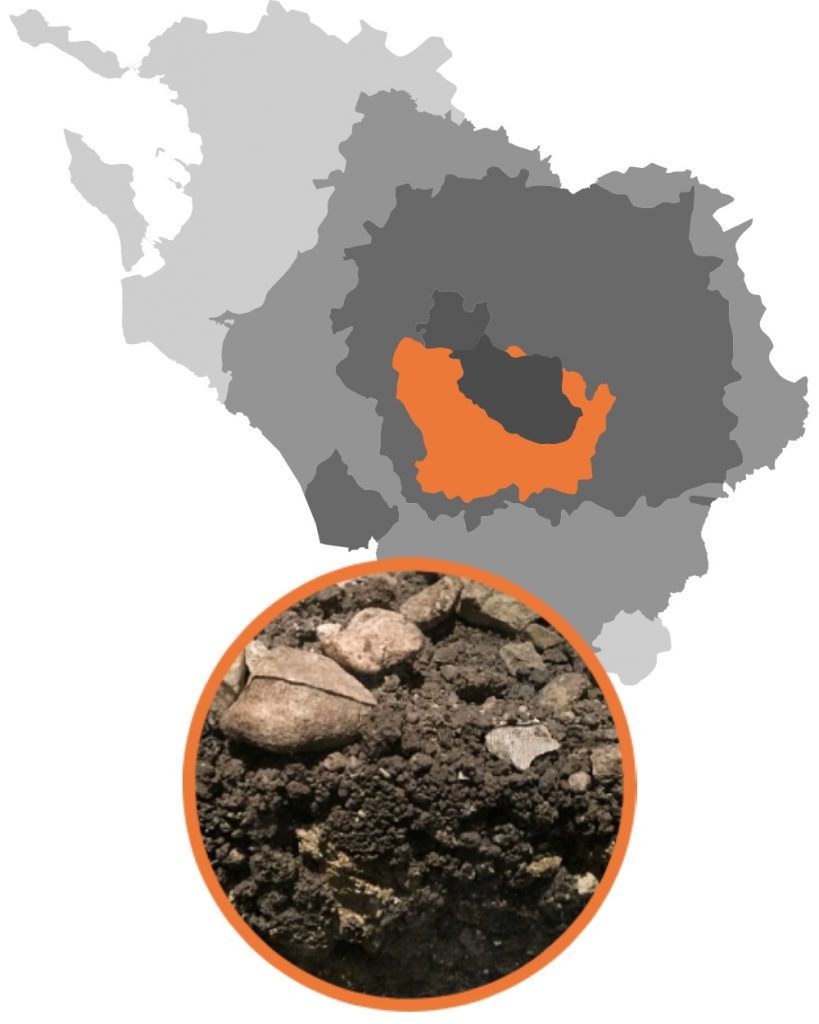
The soils of Petite Champagne are home to another of Coquand’s super-soils—this one is called Santonian. It’s so-named after the collective area of Saintonge. Grapes grown here produce eaux-de-vie that’s light and fine, with a predominantly floral bouquet. Similar to Grande Champagne, wines grown here take a long time to mature.
Discover the Cognacs of Petite Champagne.
3. Borderies
At a glance
- 12,500 hectares in size, of which 4,000 are vineyards
- Located on a plateau. The soil is predominantly clay with many flint stones
- Major cities: Burie
- Cognac houses within the terroir: Camus, Ordonneau
About the soil
The smallest of all the terroirs, Borderies covers around 12,500 hectares but only a mere 4,000 hectares of vines. It also contains the final of the five soils identified by Coquand—Groies—which is a mixture of chalk and clay. It’s also the oldest soil in the region, dating back to the Jurassic era. Over time, the limestone content has decomposed, leaving a terrain that produces rounded eaux-de-vie with unique characteristics only found here; the aroma of violets, and nutty, toffee flavors.
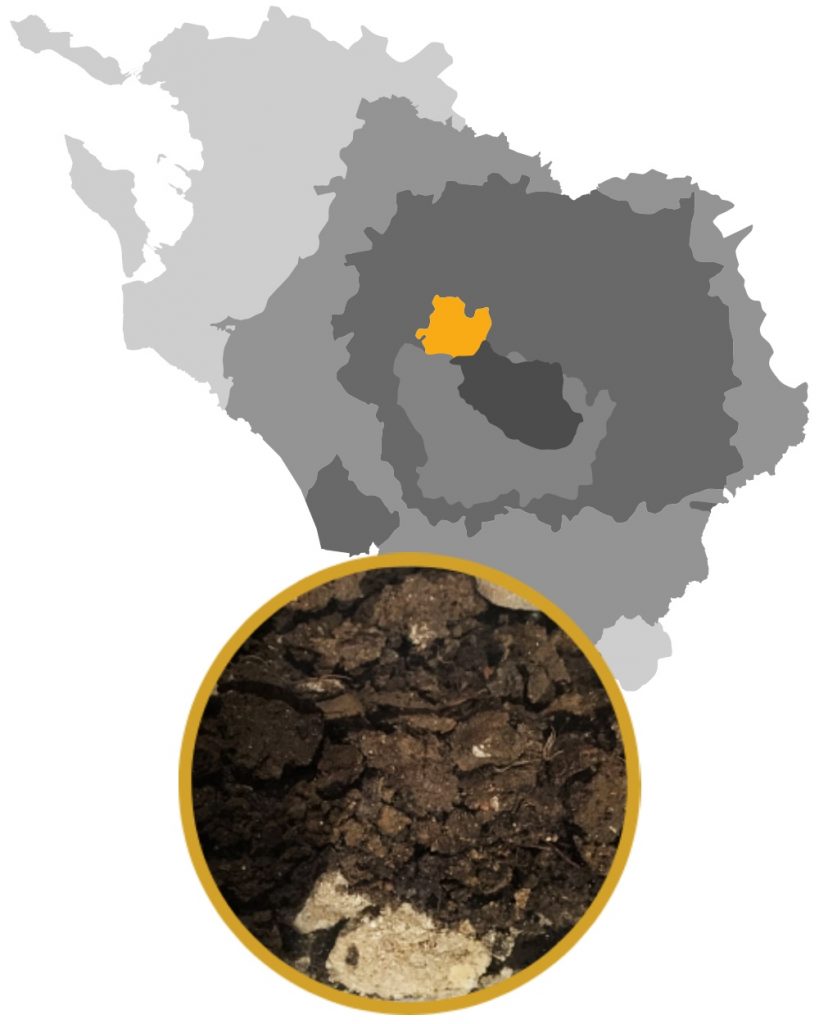
The Borderies region is of particular interest to paleontologists, with over 2000 fossilized remains having been discovered in the area. Theses include teeth of dinosaurs, crocodiles, and pterosaurs that were protected by the clay content for over 135 million years!
Discover the Cognacs of the Borderies terroir.
4. Fins Bois
At a glance
- 350,000 hectares in size, of which 31,200 are vineyards
- Mixed soil, a combination of red clay, stone, and limestone
- Major cities: Angouleme, Saintes, St-Jean d’Angely
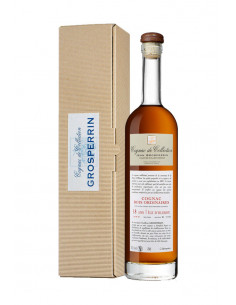
- Cognac houses within the terroir: Leyrat, Grosperrin
About the soil
The largest of all the growth areas at 350,000 hectares, with 31,200 planted to vines. Fins Bois has a mixed soil of clay, stone, and limestone, but has far less chalk content than the previous three terroirs mentioned. In addition, the chalk is of a different type, being far less porous—It’s the same as that found in the wine growing regions of Burgundy and Champagne. The Grapes grown here produce eaux-de-vie that is round, supple, and with aromas of freshly squeezed fruit.
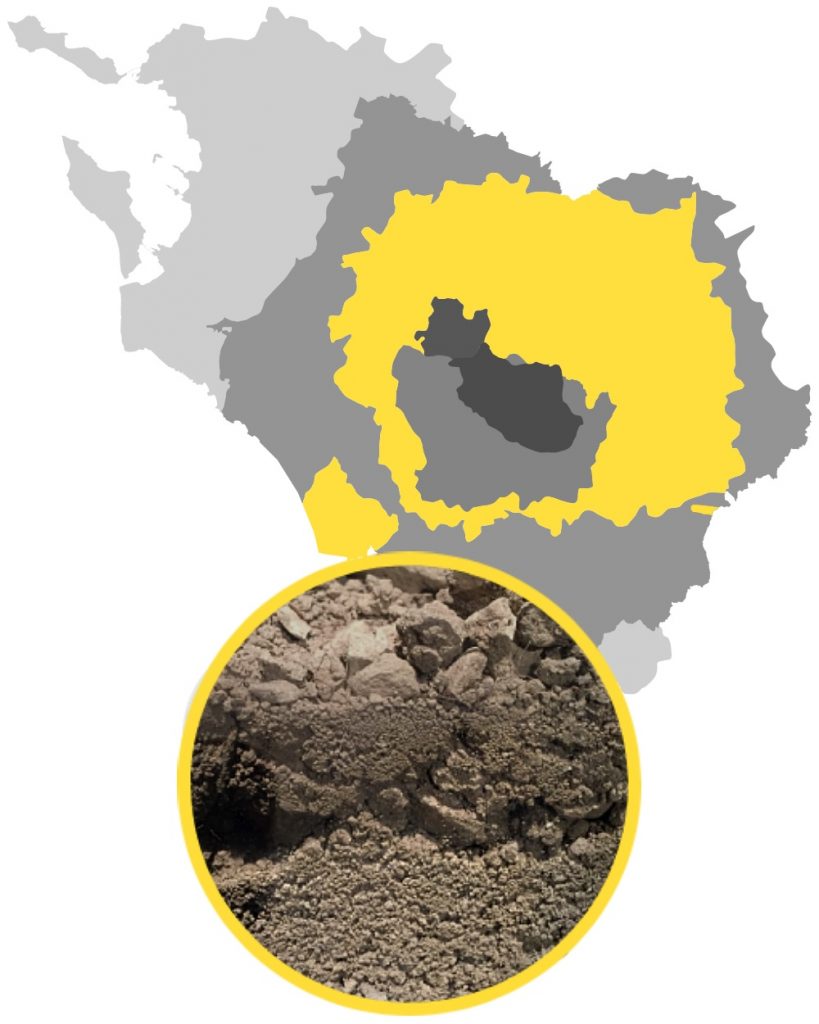
However, within the terroir of Fins Bois there are pockets of chalk that are very similar to that of Grande Champagne. These produce remarkable eaux-de-vie, making the addition of such a Fins Bois to a blend extremely desirable. Not to mention, of course, how good such a single vineyard offering might be.
Discover the Cognacs of Fins Bois.
5. Bons Bois
At a glance
- 370,000 hectares in size, of which 9,300 are vineyards
- A wide mix of soils, made up from sand, clay, and limestone
- Major cities: Saujon, Montlieu-la-Garde
- Cognac houses within the terroir: Andre Petite
About the soil
The terroir of Bons Bois covers 370,000 hectares and 9,300 hectares of vines. The soil here is a mixture of clay, limestone, and sand. Eaux-de-vie from this region is round and ages much quicker than that of many of the other areas. Once again the regions has a few areas of high quality chalk, and these can produce some exceptional Cognacs.
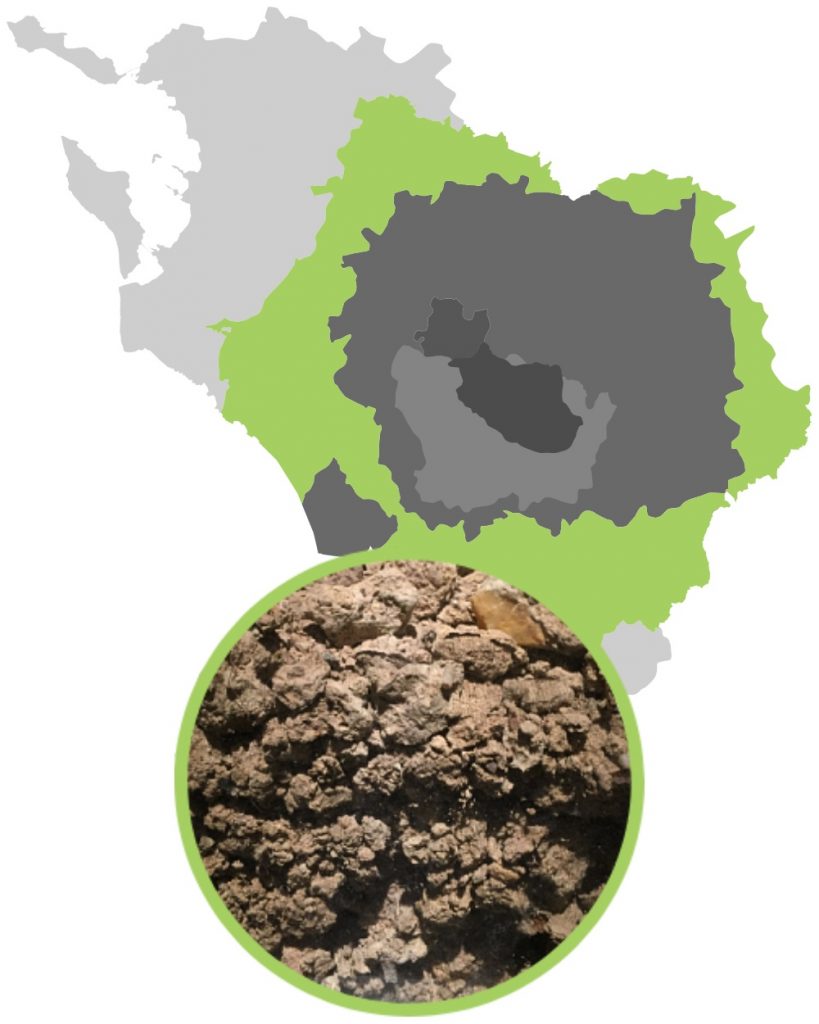
Discover the great Cognacs of the Bons Bois terroir.
6. Bois Ordinaires
At a glance
- 260,000 hectares in size, of which 1,066 are vineyards
- Soil is mainly sandy and includes the islands of Ile de Ré and Ile d’Oléron
- Major cities: La Rochelle, Rochefort
- Cognac houses within the terroir: Godet, Normandin Mercier
About the soil
Covering 260,000 hectares but with a mere 1066 hectares of vines, the soils here are very sandy and have very little chalk. It includes the regions of Ile de Re and Ile d’Oleron. Eaux-de-vie from this region ages fast and has a very characteristic maritime taste. While many would consider these Cognacs to be of a lower quality than from more prime terroirs, the proximity to the ocean leads to a distinct flavor. This has led to some wonderful Cognacs being brought to market, such as those produced by Camus.
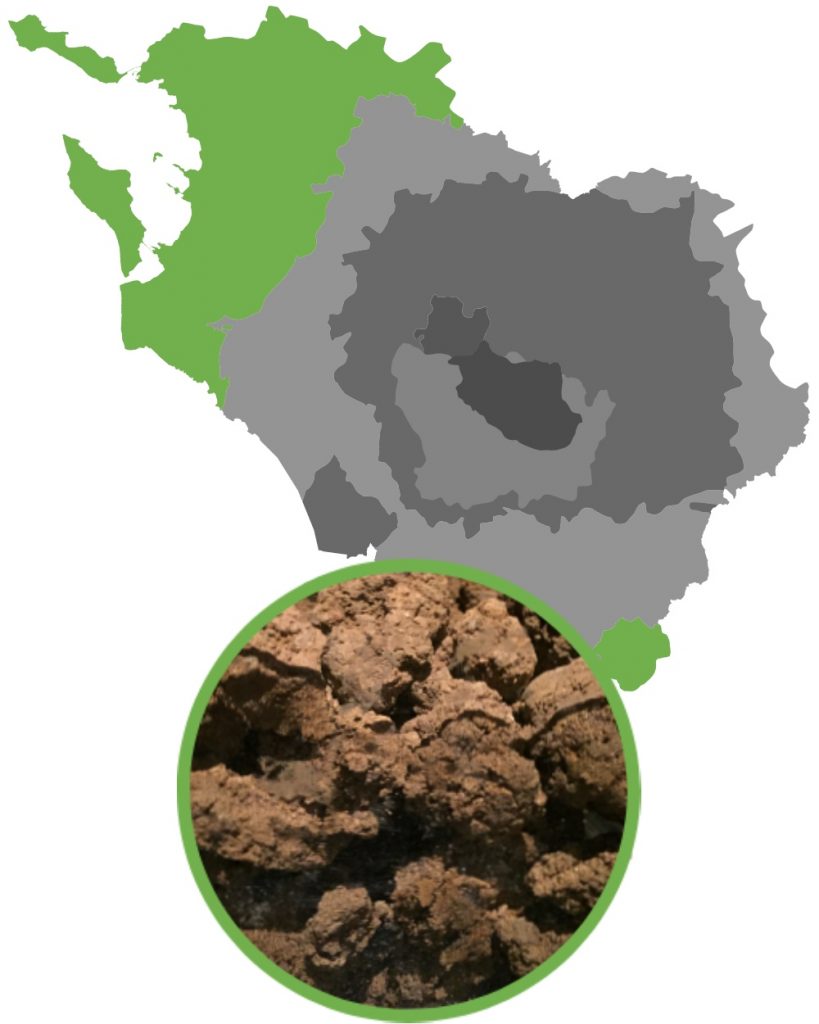
Discover the many Cognacs of Bois Ordinaries.
So what’s the big deal about chalk?
There are two main reasons that the chalk content and type is so important. The first is that it lends itself to good drainage, whilst still keeping a good percentage of moisture. As this region of France has a temperate climate, with some hot, dry spells during spring and summer, this is very important to ensure the deep roots of the vines remain well-hydrated. Vine roots can grow to a depth of 25 meters, so a constant supply of water is paramount for successful growth.
Secondly, grapes grown in chalky soils are higher in acidity and this acid content is vital to produce good Cognac. While you certainly wouldn’t look for such a quality in a wine, it’s essential for Cognac.
Expand your horizons
So there you have it; a round up of the six different terroirs of the Cognac region. As you can see, each has its own unique qualities, leading to totally different flavors, aromas, and complexity. While it remains true that Grande Champagne and Petite Champagne Cognacs will undoubtedly remain sought after, if you’re prepared to open yourself to the differences on offer, you can really expand your knowledge and pleasure when choosing what to try.
Related products

Get articles like these and more:
Subscribe to our mailing list


7 Comments
Hello Max,
Amazing article. Very informative.
One thing that caught my eye is the total size of the vineyards (~75000 ha), given the dimension of the AOC delimited area for the production of Cognac (~1 mi ha).
Why don’t Cognac producers expand their vineyards?
Thanks!