Your cart
There are no more items in your cart

Available
Sip & Savor Cognac Club: Quarterly Cognac (1 Cognac & 3 samples) , Exclusive Tastings & Releases Starting from $99


Despite the surge in popularity of cognac across the globe, a lot of confusion still surrounds the term. So we’re here to give you the clear-cut guide on both the brandy and the town, both of which we are very fond of.
Keep reading and we will be covering the following:


Terroir actually means far more than simply the land or soil. It’s a unique description that describes both the geographical and the climatic conditions.
Cognac, the place, is a beautiful town in the region of Southwest France and the winemakers in this region grow their grapes to produce brandy, also called cognac. The soils around the town of Cognac predominantly consist of chalk, and this leads to grapes that produce very acidic wines, which are ideal for distilling into the best brandy.
All of the soil around the town of Cognac is not exactly the same though, and does not produce the same flavors, far from it. Keep reading as we take a closer look at how the region varies and present our top choices of cognac within each terroir.
The Cognac region of France consists of six vineyard growth areas, called ‘crus’, or ‘terroirs’. The grapes used for cognac brandy must always come from this French region. The area covers the Charente-Maritime, a large part of the Charente, and some smaller parts of Deux-Sèvres and the famous Dordogne.
The Appellation d'Origine Contrôlée (AOC), meaning “Controlled Appellation of Origin” , totals about 79,000 hectares of vineyards in Cognac, that’s about 790 million square meters. The wine region of Cognac is the second biggest in France, right after the wine region of Bordeaux.
The terroir, or to translate literally, the land, earth or soil, that a cognac originates from is information that is often stated on the bottle. But what does it really mean? And more importantly, what bearing does it have when it comes to making a purchasing decision?
Well, quite frankly, a lot. So let’s attempt to demystify what is quintessentially a French word and why for the best cognac experience, it pays to know your terroirs.

The six growth areas in the Cognac region are: Grande Champagne, Petite Champagne, Borderies, Fins Bois, Bons Bois and Bois Ordinaires. These areas are referred to in many ways, such as ‘cru’ or ‘growth region’, but those in the know about cognac will always use the word, terroir.
This is because terroir actually means far more than simply the land or soil. It’s a unique description that describes both the geographical and the climatic conditions. This is very important, because both have a real bearing on the grapes that grow there. The soil in each terroir is unique, and it’s this earth that nourishes the vines and grapes that come to life. Because the soils are so different, so are the grapes that grow there and therefore the wine they produce. Naturally, these differences continue right down the line to the end product that we call, cognac.
The Petite and Grande Champagne regions in Cognac should not be confused with the famous region of Champagne, which is situated in the north of France. The Champagne wine region produces the iconic sparkling wine synonymous with special occasions. Read more in our article, “Why is Cognac called Champagne?” to understand this confusing terminology and then have a look at our “Cognac and Champagne - more similar than you might first think” article, to send you back into your state of confusion.
The table below shows the approximate sizes and differences in soil type of the six terroirs. The soils in each, and even within each terroir, can have dramatic differences. In one place you might find a lot of sand, and only 700 meters away the soil might be very chalky.
The soil in the Cognac region is pretty extraordinary. It’s part of a region known as the Aquitaine basin, and has been formed thanks to global climate change over the millennia. The seas moved inland and out again, laying down layers of marine sedimentary deposits from as early as the Jurassic period. This makes for soils that really do contain micro remains of dinosaurs. Throw erosion and tectonic forces into the mix, fast forward 200 million years to today, and you end up with a landscape that is totally dominated by chalk.
In the mid-1800s a detailed evaluation of the Cognac landscape was undertaken by local geologist, Henri Coquand. This took him over a decade to complete, and was the first in-depth geological survey ever carried out in the area. Coquand was also accompanied by an oenologist, an expert in the science and study of winemaking. Not only did their results determine the boundaries of the individual terroirs, but also how best the wine from each region would be distilled and aged, as well as the quality that each produced.
Coquand identified five specific types of soil that were particularly suited to the production of the best quality cognac. We’ll talk more about these soils in the individual growth region descriptions below. As you’re about to find out, the production of cognac has as much to do with the chalk content of the soil as anything else. And if you thought chalk was simply chalk, then think again. Because the type of chalk contained within the soil really does determine the taste of the cognac you drink today. Chalk makes soil crumbly and friable. It’s this physical property that’s so important to the grapes that grow here.
The two best growth regions are named respectively, Grande Champagne and Petite Champagne. Historically the eaux-de-vie created in these regions is the most sought after and commands the highest prices. When a cognac is produced from a blend of eaux-de-vie from both of these regions, with at least 50% from Grande Champagne, it can be classed as a ‘Fine Champagne’ cognac, check out our Top 10 Fine Champagne Cognacs you have to try.
However, there has been a definite shift over recent years as consumers become more experimental with their tasting experience. For while it’s a truism that these growth regions do produce the highest quality eaux-de-vie in the traditional sense, the penchant for people to appreciate and actively seek out the unique characteristics of other terroirs has become far more widespread.
Spanning 34,700 hectares, of which 13,250 are covered with vineyards, Grande Champagne is known as the ‘premier cru’ growth area. This simply means that the soils are such that they produce the highest quality grapes for making cognac. It is a hilly region, with soil made up predominantly of limestone (chalk).
It’s time to understand a little more about chalk and soil. In the heart of the Grande Champagne region, the chalk within the soil is very pure. This type of chalky soil is one of the five discovered by Coquand, and is called Campanian. This chalk is mainly found at the highest elevations of this terroir. However, the story of chalk certainly doesn’t end there, because there are two further layers that reach surface level at various points of Grande Champagne. These are called Angoumous chalk, and Cognacian chalk, the latter of which is found around the town of Cognac itself.
The high chalk content of this region is the product of millions of year’s accumulation of small marine fossils. One of these fossils is totally unique to the area – an oyster from the Cretaceous period known as, Ostrea vesicularis.
The soils of Grande Champagne produce cognac of extreme finesse. They are floral, light, and require a long aging period to hit maturity. Some Grande Champagne eaux-de-vie can take a century or more of aging in oak barrels to reach their peak.
Grande Champagne facts
Total Cru size: 34,700 ha
Vineyard Plantation: 13,250 ha
Characteristics: Rather hilly, chalk soils, known as premier cru
Reason for choosing: one of the best rated Cognacs
Fruity, multifaceted and complex from beginning to end. Non-chill filtered, not colored or boiséd, this is a beautiful half a century old Cognac straight from the barrel.
Reason for choosing: Rpresenting tradition and heritage
A marriage of three sought-after eaux-de-vie, each from the mid-1990s. Packed with zesty aromas of candied lemons, nectarines, peaches, apricots, raisins and roasted pears.
The soils in this region are still predominantly made of chalk, but the soil is more compact. It also covers a much larger overall area than it’s big brother, Grande Champagne; 65,600 hectares in total. However, only 15,250 hectares consist of vineyards. The terrain is such that water flows very slowly here, meaning it remains damp even during particularly dry summers.
Another of Coquand’s ‘super soils’ covers much of this region. He named it Santonian, after the collective area of Saintonge. Grapes grown here produce Petite Champagne cognac that is light and fine, with a predominantly floral bouquet. In common with that of Grande Champagne, it takes a long time to mature.
We love the multi-award winning Bertrand XO Cognac. It boasts some wonderfully unusual aromas and flavors, including that of cocoa and walnut. Pure Petite Champagne, the average age of each eau-de-vie that makes up the blend is around 35 years.
Petite Champagne facts
Total Cru size: 65,600 ha
Vineyard Plantation: 15,250 ha
Characteristics: Less hilly, chalk soild, more compact than Grande Champagne
Reason for choosing: Fantastic cellar master: Elodie
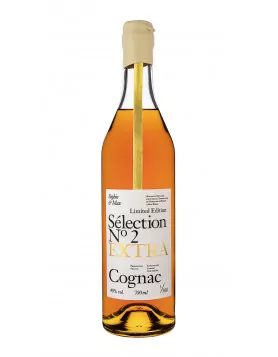
Symbolic of the porous and chalky soils of the Petite Champagne cru, Sophie and Max Selection N° 2 epitomizes the importance of outstanding quality grapes, alongside artisanal craftsmanship, when it comes to producing great Cognac.
Reason for choosing: Remarkable palate
A fine, single barrel Cognac from the special year of 1966. The palate is long and rounded with intriguing flavors of menthol, walnut, and licorice. Enjoy this Cognac!
The smallest of all the terroirs, Borderies covers around 12,500 hectares, but with only a mere 4,000 hectares of vines. It also contains the final of the five soils identified by Coquand; Groies. It’s a mixture of both chalk and clay. It’s also the oldest soil in the region, dating back to the Jurassic era. Over time the limestone content has decomposed, and the terroir produces rounded eaux-de-vie, with characteristics only found here; the aroma of violets, and nutty, toffee flavors. The exclusivity and uniqueness of the Borderies region has meant it is the most sought after of the Cognac growth areas.
The Borderies region is also of particular interest to paleontologists, with over 2000 fossilized remains having been discovered here. These include teeth of dinosaurs, crocodiles, and pterosaurs that were protected by the clay content for over 135 million years!
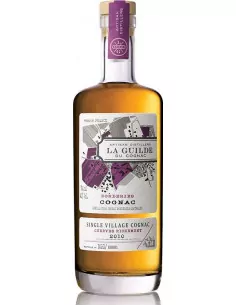
You can find some excellent Borderies cognac brands on our shop, one of our favorites is La Guilde who produce a quintessential example of Borderies Cognac from the harvest of 2010.
Borderies facts
Total Cru size: 12,500 ha
Vineyard Plantation: 4,000 ha
Characteristics: On a plateau, clay soils with flint stones
Reason for choosing: Value for money
The Ordonneau Extra de Borderies Cognac reveals a fruity, fragrant and well-rounded Borderies profile. A hidden gem and must-try for those looking to explore a smaller artisan Cognac house.
Reason for choosing: Clever barrel-finish concept
A vintage Cognac from the year 2010, which is remembered as experiencing a near-perfect climate. The final product is a complex Cognac that is well-rounded and rich.
The largest of all the growth areas at 350,000 hectares, with 31,200 planted to vines. Fins Bois has a mixed soil of clay, stone, and limestone, but has far less chalk content than the previous three terroirs mentioned. The chalk is also of a different type, being far less porous. It’s the same, in fact, as that found in the wine growing regions of Burgundy and Champagne. The grapes grown here produce eau-de-vie that is round, supple, and with aromas of freshly squeezed fruit.
However, within the terroir of Fins Bois there are pockets of chalk very similar to that of Grande Champagne. Some remarkable eau-de-vie is produced here, making the addition of such a Fins Bois cognac to a blend extremely desirable. Not to mention, of course, how good such a single vineyard offering might be.
For an exceptional Fins Bois cognac, look no further than the ABK6 XO Family Reserved Aged 10 Years Cognac. With too many awards to mention, this single estate cognac is a joy from every angle. It’s beautifully presented in a contemporary bottle, teases the eye, delights the nose, and is simply sublime on the palate. If you’ve yet to fall in love with cognacs from the Fins Bois terroir, this will definitely be the one that will make your heart go all a-flutter.
Fins Bois facts
Total Cru size: 350,00 ha
Vineyard Plantation: 31,200 ha
Characteristics: Mixed soils - red clay, stones, and limestones
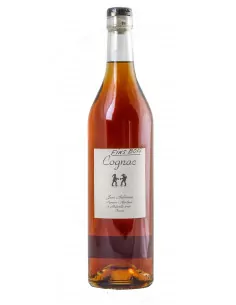
Reason for choosing: We love Jean
A delightful single-barrel Cognac produced using traditional methods. The vintage is from 1957 and is stunningly oak-rich with a cask strength of 48%. Only few bottles left.
Reason for choosing: Single Cask Vintage
An exuberant single cask Fins Bois Cognac from 1996. Characterized by dominant nuances of violet, jasmine and exotic fruits. A truly tantalizing treat for those that enjoy complex aromas.
The terroir of Bons Bois covers 370,000 hectares with 9,300 hectares of vines. The soil here is a mixture of clay, limestone, and sand. Eau-de-vie from this region is round, and ages much quicker than that of many of the other areas. Once again the region has a few areas of high-quality chalk, and these can produce some exceptional Bon Bois cognacs.
Bons Bois facts
Total Cru size: 370,00 ha
Vineyard Plantation: 9,300 ha
Characteristics: Mixed soils - clay, limestones, and sand
Reason for choosing: Memorable Multimillesime
A unique combination of three vintages, acquired by Thibault Mauxion from a family of winegrowers in the Bons Bois region. This cask strength Cognac has a syrupy texture with a multitude of flavors.
Reason for choosing: Aged for generations
A limited edition fine quality Cognac, with aromas of white mushrooms, wet leaves and saddle leather, followed by a fruity sweetness.
Covering 260,000 hectares and 1066 hectares of vines, the soils here are very sandy, with little chalk. The terroir includes the regions of Ile de Re and Ile d’Oleron. Eau-de-vie from this cru ages fast, and has a very characteristic ‘maritime’ taste. While many would consider these cognacs to be of a lower quality than from more prime terroirs, the proximity to the ocean leads to a distinct flavor. This has led to some wonderful cognacs being brought to market, such as those produced by Camus. We love the Camus Ile de Re Cliffside Cognac, a great example of how the salty location creates its unique stamp on eau-de-vie from this terroir.
Bois Ordinaires facts
Total Cru size: 260,000 ha
Vineyard Plantation: 1,066 ha
Characteristics: Mainly sand soils, including Ile de Ré and Ile d’Oléron
Reason for choosing: Unique Concept
A unique Cognac concept, this eaux-de-vie has been aged just meters from the Atlantic Ocean ins a cliffside damp cellar. The result is a Cognac with fruit notes of dried grapes, dominant orange and a sweetness of caramel.
Reason for choosing: From the island Ile d’Oléron
Grosperrin N°90 Bois Ordinaire de l'Ile d'Oléron Cognac is the sublime result of the Bois Ordinaires sandy soils, alongside a large exposure to the Atlantic Ocean and almost Mediterranean sunshine.
There are two main reasons that the chalk content and type is so important. The first is that it lends itself to good drainage, whilst still keeping a good percentage of moisture. Being as this region of France has a temperate climate, with some hot, dry spells during spring and summer, this is very important to allow the deep roots of the vines to keep well hydrated. These roots can grow to a depth of 25 meters, so the ability for a constant supply of water is paramount for the successful growth of the fruit.
Secondly, grapes grown in chalky soils are higher in acidity. This acid content is vital to produce good cognac. While you certainly wouldn’t look for such a quality in a wine, for cognac, it’s essential.
So there you have it; a round up of the six different terroirs of the Cognac region. As you can see, each has its own unique qualities, leading to totally different flavors, aromas, and complexity.
While it remains true that Grande Champagne and Petite Champagne cognacs will always be the most sought after, if you’re prepared to open yourself to the differences on offer, you can really expand your knowledge and pleasure when choosing what to try.
Now, the next time that someone asks the question, “where is cognac made?” You’ll be fully equipped to give them the in-depth answer, complete with terroir and flavor analysis. However, the most fundamental question is “Is cognac French?” And the answer to this is, it is always and only French! We will delve a little further into this in our ‘cognac history’ section, so keep reading.
Drinking and Dining, Hiking, Fishing, Cycling, Golfing, Water sports and a lot of History - discover the region
As much as we love to talk about the delights of our favorite drink, it would be wrong for us to not acknowledge all the other experiences that the region of Cognac has to offer. The town has been seeing its tourism increase year on year, and not just from the expected British, there has also been a significant rise in visitors from America, Sweden, Norway and China! Cognac and the Poitou Charentes are superb for a wide array of interests such as hiking, golfing, dining and taking in the culture. And of course, If you combine these passions with a tasting at a cognac house, then could there honestly be a better vacation destination?
So in honor of the region and the drink, we’ve compiled this travel guide to ensure you can have the best Cognac experience.

Well obviously we had to mention this first. Visiting the cognac houses of the region is an absolute must for many visitors, with the popularity of the tours increasing each year. Have a read of our article after we did our own Cognac tour and visited six of the distilleries.
If you fancy viewing one of the ‘big four’, you could visit cognac distillery Remy Martin Merpins establishment, which is open all year round and offers a premium tour that concludes with the chance to taste three different cognacs, along with some nibbles.
For 25 euros you can take part in a select tour of only eight people, lasting two hours. The tour begins in the Remy Martin Francis Cellar – built by the students of Gustave Eiffel. Here you can see huge portraits of the four cellar masters of the past two centuries that adorn the fermentation tanks.
You will then continue to enjoy a guided tour of the rest of the establishment, which is made up of several separate buildings and streets before ending up in the private tasting room. Here you will sip at two VSOP’s and an XO before your tour finally comes to an end.
There is also the opportunity to visit Martell Cognac house, its tours operate between November and March on an appointment only basis. Or perhaps your preference is a Hennessy Cognac visit cognac tour, the distillery has four different tour options to choose from.
It’s not quite one of the big four (although it does come in at a strong fifth), but if you choose to visit Camus Cognac house, then you’ll be lucky enough to be able to create your own cognac blend!
Whilst you’ll undoubtedly want to visit one of the cognac giants, if you’ve the time we definitely recommend spending some time at one of the smaller producers. There are so many to choose from, and you’ll experience a very different tour from that of the big cognac houses. Most speak at least some English, and the language barrier is all part of the charm of visiting these artisan producers.
You can find our reviews of some of the Cognac House tours on our Cognac blog, including both free and paid for visits.


Not only is the region home to a spectacular drink, but you can also indulge in a wide array of delicious dishes. From goat’s cheese to beef, capons to chestnuts, there’s always a local speciality to enjoy in each area of the region.
In terms of restaurants, we highly recommend Restaurant La Ribaudiere. This is the place where the big cognac merchants come to toast when a deal is done. The restaurant is a country house located on the River Charente and boasts a wonderful view.
The bourgeois manor house has been modernized recently: Once wood-brown designed, the restaurant now presents itself in stylish-modern white. Interesting is the cognac lounge, designed in purple, red and pink. Somehow this place does not really fit in. But the cuisine is exquisite!
If you prefer to whip up your own delicacies, then be sure to pay a visit to the many local markets. Here you can get fresh, locally produced products such as fruit and vegetables, cheeses, breads and meats. You’ll often find other artisan produced art and crafts on sale here. Don’t forget your camera to capture some memories of a real taste of authentic France.


If you visit in the months of December, January or February, you can take part in an event known as Les Bonnes Chauffes. This is where houses, distillers and winegrowers open their doors during the weekends to the public for free visits and tastings. Some restaurants and bars also get involved, and create menus of local products with a Cognac and Pineau theme. Music also plays a big part, meaning that an out of season visit to the region really could be a trip to remember.
Walking and hiking
We’re big walkers and hikers ourselves, and love to explore the region. But we must admit, finding good information about walking in Cognac and the surrounding area is somewhat challenging. So, we’ve suggested some circular walks that will suit all levels of fitness for you below:
One thing to understand before embarking on your hike, is that there are three main types of footpaths in France. These are:
Grande Randonnees du Pays; known as GRP. These are marked with a yellow and red parallel line.
Grande Randonnees; known as GR. These are marked with a white and red parallel line.
Promenades et Randonnees; known as PR. These are marked with a single yellow line.

Any good walking shop or the Cognac tourist office will be able to sell you maps of the region. Or you can download the areas you want from IGN (Intitut Geographique National). Maps Worldwide have a great website that’s easy to navigate and choose the exact one's you need.
Easy walk: Start & end in Moulidars 16290
Moulidars is 17 miles east of the town of Cognac, about a 25-minute drive. This easy level walk is 5.7 miles long, and will take around 3 hours at an average walking pace. It’s a delightful stroll in the French countryside, taking in vineyards, forests, and the town of Moulidars.
Longer walk: Start & end in Saint Preuil 16130
At just over 12 miles, this delightful walk in the heart of Grande Champagne terroir offers a wonderful insight into the heritage of the region. Discover some great architectural history of the 13th century, cosy hamlets, rural heritage and water sources, not to mention flora and fauna of the area. For the cognac lover, it can be a thrill to know that vines you see along the way could well be the very beginning of a future Hennessy or Remy Martin cognac luxury, as many of their vineyards are located in this area. Expect the walk to take a little over 6 hours.
A leisurely stroll: Walking on the Ile de Re
The Ile de Re is a wonderful place to while away a few hours, a day, or longer. And with streets and tracks just made for walking (and cycling, if that’s your thing), this tiny area of the Charente Maritime will welcome you to what is a quintessentially French corner of the country. Being as the island is only 30kms by 5kms, and with very well marked walking and cycling trails, there’s no chance of getting lost. So just wander, take a turn here and there, relax, and enjoy. Plus there are plenty of places to stop for refreshment (of the food or liquid variety–this is a vacation, after all).
Of course, those who know their cognac will be aware that the unique microclimate here makes for a very special place to grow and harvest grapes. And none do it better than the house of Camus, with their three unique cognacs created from eau-de-vie that started life in this salty, marine atmosphere. The Camus Ile de Re Fine Island, Camus Double Matured, and the Camus Cliffside Cellar would all be the perfect cognac to enjoy after a day walking the town and terroir of this beautiful, and often sadly overlooked, part of the region.
The Cognac region really does lend itself perfectly to exploration by bike. With rolling countryside, there’s never a hill that’s too steep to climb, and there’s plenty of opportunities to freewheel down a deserted road surrounded only be vineyards.
Very handily, there are five sign posted tourist routes, known as the Etapes de Cognac. Each of these starts in the city of Cognac itself, and explores a different region of the area. The website, Free Wheeling France has some great information and links to other sites where there are even more cycling routes to be discovered.
We recommend packing a picnic, which should, of course, include a bottle of the good stuff.The delicious Francois Peyrot XO would be a great choice. It’s won more awards than we can list, plus it’s been produced with absolutely no chemical intervention whatsoever. So you can sip away with a clear conscience, not only that you’re drinking an eco friendly cognac, but that you’ve also had no carbon footprint at all, thanks to carrying out your explorations by bike.
When it comes to catching your own, the Poitou Charentes is an amazing part of the world that will seduce you with its incredible fishing opportunities. The Charente River, numerous lakes, a network of canals, smaller rivers, and, of course, the mighty Atlantic Ocean, all add up to one of the best regions in the whole of Europe to cast your line.
Fresh water fishing
It’s necessary to get a license, known as a Carte de Peche, before you fish any of the inland waterways. This is easily purchased from any supermarket, fishing tackle shop, or retailer that displays the Carte de Peche sign, or online here. There are different kinds, including a day permit and a holiday permit, but all are explained on the website (which has a partially English language version that covers what you need to know about buying a permit).
As is usual in many countries, there are seasons where catching certain kinds of fish is not allowed. These are all detailed on the Carte de Peche website, but in general there are restrictions on trout, pike, and zander species. Most others can be fished all year round.
There’s some great sport to be had at the beautiful town of Sireuil, where many regional and national fishing competitions are held. There’s several miles of river with perfect access, and the area is noted for tench, bream, and roach. You can also night fish here for carp. If you fancy trying for pike and zander, head to St Germain de Conflons. Another great place is the lovely market town of Chateauneuf sur Charente, which provides opportunity for silure and pike, large carp, chub, and barbell. Let’s not forget the giant catfish that frequent the Charente, and of course, the difficult to bag, small river trout.
Atlantic spoils
Turning towards the ocean brings further amazing opportunities and you don’t even require a license–just cast your rod and get snagging! The Charente Maritime coastline is awash with bass, sole, turbot, mackerel, sea bream, and rays. You can either fish from the beach, or track down your prey by boat. There’s plenty of trips running from Royan, La Rochelle, and the Ile d’Oleron. In fact, you can even take your non-fishing spouse or partner with you, as some trips include all tackle and instruction.


Can there be anything more enjoyable than a round of golf followed by an afternoon of cognac? Well, you’re certainly in the right part of the world to enjoy both, because there are some great golf courses to play. And many are only a stone’s throw away from a great cognac house or two.
Golf du Cognac
The delightful Golf du Cognac is an 18-hole course bordered on all sides by cognac vineyards. Home to many competitions, the club is very welcoming to visitors and has a great restaurant and terrace with outstanding views. The course is well maintained, set in rolling countryside, and is open daily from 9am to 5pm. Reservations are recommended, although on a Tuesday in low season (AKA, winter) it’s not necessary to book.
Once you’ve finished, we recommend taking the short drive (8 miles) to the house of J. Painturaud Cognac for a wonderful introduction to this small, traditional artisan house. You can visit here for free, year round, and enjoy a tour that’ll likely be from a family member.
Golf Club d’Oleron
When it comes to location, this superb little course really does have it all. It’s literally a peaceful green golf haven, surrounded by sand dunes and stunning ocean views. In fact, you actually get to play on a beach front area, one of the few in the world to offer this.
Yes, it’s small (9 holes spread over 30 hectares), but make no mistake, this is a tricky little course. It was built in 1987, and is open year round. It boasts a stunning club house and you’ll be sure of a warm welcome. Close by, seven miles away in La Bree les Bains, is the tiny cognac house of Maxime Pinard. This is a wonderful producer to visit, and they’re open year round.
Golf de Saintes - Louis Rouyer Guillet Golf Club
Located only five minutes drive from the town of Saintes, this 18 hole course is great for all levels of players. It’s in a lovely location, with the historically relevant remains of an old Roman aqueduct that used to serve the ancient Aquitaine capital, Mediolanum Santonum. The course was built in 1953, and is the oldest in the region.
In addition to the course there’s a delightful bar and restaurant that’s open seven days a week (9 am until 7 pm). And being as you’re now so close to the town of Saintes, we highly recommend a visit to the cognac house of Grosperrin. Family run, truly traditional, and very much a craft brand, they produce a delightful range of very old and vintage cognacs.
Head to the tranquil waters of the Charente River, the perfect playground for all the family and accessible from right in the city centre.
The Cognac Canoe Club is located in the Saint Jacques quarter, right next to the main Pont Neuf Bridge. You can hire canoes, kayaks, or stand up paddle boards by the hour. Indeed, an hour’s trip covering 3 km (approximately 2 miles) is the perfect method to see the historic waterside features of the city, as well as many of the cognac trading houses. There’s instruction if you need it, or many varying experiences if you want something a little more ‘white knuckle’. If you’d prefer not to expend too much effort, then there’s a great selection of Cognac boat trips, hire one with an engine and putt-putt your way up or down stream. These boats carry up to 5 people, so great for a family outing.
If you’re a particularly avid boat lover, then you might also be interested in Holland America Cruises' “Cognac & Hennessy” excursion on the cruiser Prinsendam.
The Atlantic region is also world renowned for its amazing surf and the beaches of Gironde are easily accessible from the Cognac region. For experts and beginners alike, the hundreds of miles of coastline offer amazing surfing opportunities. There’s surf schools if you want to learn, or simply need to hire some kit. Or for the kids, why not grab a boogie board and head into the waves for a spot of body surfing.
Musée des Arts du Cognac
Located in the heart of old Cognac, this is perhaps one of the best places in the world to visit to take a trip back through time and discover what’s earned the drink of cognac such a special place in the hearts of so many people. Housed in a 16th century mansion, the museum boasts more than 800 exhibits and documents, as well as state of the art computerized projections and audio visual exhibitions.
Discover the Musée des Arts du Cognac.


Walk around Cognac Old Town
Taking a stroll around the medieval quarter of Cognac (Vieux Cognac) really is like taking a jaunt back in time. Many of the buildings date back to the 15th and 16th centuries and are some of the original places inhabited by the early Cognac merchants.
La Rochelle
At the mouth of the River Charente, the port town of La Rochelle played a vital part in the original exportation of cognac by sea in the early 13th century. It’s a beautiful place to visit; and definitely worth more than a day trip. The harbor is enchanting, and it’s a real treat to see it at different times of the day. The hustle and bustle of the day time, the hubbub that overtakes come evening and sunset, and the quiet thrill that envelops the town at night time when all the day trippers have left. A real must-see…
The region is abound with historical buildings, many of which it is possible to visit. One chateau Cognac visit you won’t want to miss is Rochefoucauld, which never fails to delight visitors with its twisted stone staircase and funny little sculptures.
You can also combine a visit to cognac House, Baron Otard, with a historical tour of the medieval Chateau de Cognac, within which the distillery is headquartered.
This is a car race to end all car races—especially for those who have a penchant for cognac. It’s an annual classic race, taking part over a whole weekend around the old twisting roads of the delightful town of Angouleme. Known as the Circuit des Remparts d’Angouleme, this is an unmissable event for anyone who enjoys classic cars.
And naturally, a classic event such as that deserves a classic cognac to go with it. Delamain’s XO Pale and Dry is a wonderful choice. Intense, rounded, fruity, yet mellow, is delicious medal winning cognac from a house that can be traced back to the 1600s.
So there you have it, our definitive travel guide to the Cognac region. No matter how long you decide to visit for, you’ll be spoilt for choice.

Complete history of Cognac: A long way to eau de vie from 1st century until today
The history of Cognac begins way back in the third century. The region and the beverage Cognac has a long history which involves all kinds of nations, merchants, kings and aristocrats, natural catastrophes, wars and cold winters. Despite all this, the product kept improving, century after century.


So settle in for the full history of cognac, “the elixir of the gods”:
First century: Emperor Titus Flavius Domitianus forbids cultivating wine.
Third century: Roman Emperor Marcus Aurelius Probus reintroduces the law and grants the Gallic people to own vineyards and to produce wine.
Skip to the 12th century: Guillaume X, the Duke of Guyenne and Poitiers, orders people to plant vineyards in the region of Poitou Charente.
1204: The first merchants from La Rochelle come to England to sell wine.
1270: Salt and wine from the region of Saintonge are traded in Hamburg (Hanse). The Frapin family also settles in to the region of Charente in this year.
1337: With the beginning of the 100 Year War between England and France, wine from the Charente region is exported to Great Britain.
1411: The first ‘brandy’ is distilled in the region of Armagnac. The consumers are mainly farmers.
1494: Francois I. (went on to become King of France) is born in Cognac. Years later, Francois will allow Cognac to trade salt by using the local rivers such as the Charente river. This heralded the beginning of the town’s commercial success which then led into the development of producing wine.
16th century: Dutch merchants purchased wine from the Champagne and Borderies area to ship back to the Netherlands. However, once home they realised that the wine suffered from transportation and often turned to vinegar. So, the innovative wine producers of the Cognac region began to distill the wine to sell to the sailors so that it would last on the journey home. The Dutch called the beverage Brandwijn, but at this stage it was only distilled for transportation purposes and the Dutch would add water again when consuming it.
1500: Hieronymus Brunschweig from Alsace publishes the “Liber de arte destillandi” in Strasbourg: The book about the art of distilling. Even though the book deals with distilling from a medical point of view, it describes the technique of distillation.
1548: Farmers and aristocrats revolt against the salt tax in France.
1549: The first brandy appears in Cognac: Historian André Castelot reports about a merchant from La Rochelle, who produced four casks of good cognac.
1559: The vineyards of the Aunis region produce too much wine relative to demand. At the same time, people now know that wine suffers from too long in transportation. The Dutch are already using wine in their distilleries, so the excess amounts of the Aunis wine are being distilled. The word Brandwijn leads to the word Brandy.
1571: Second appearance of an eau-de-vie in the Cognac region: A Serazin purchase is noted.
17th century: Wine merchants test ‘double distillation’: in which the eau-de-vie is distilled twice. Originally, the double distillation process was done because of lower transport costs, as it lead to less quantity and volume. This meant more space on the ships.
The brandy that had been produced in Cognac was already being transported in oak casks. This is how merchants discovered that the taste of the beverage changed when stored in barrels.
The legend of the discovery of the eau-de-vie is a slightly different, but more romantic story: “A knight (called Chevalier) lived in the area of Ségonzac and had the idea to distill wine.”
1624: Two Dutchmen, Van Der Boogwert and Loo Deyijck, found a distillery in Tonnay.
1636: Another riot occurs: the taxes on wine were simply too high. As a consequence the farmers were not able to sell their wine.
1638: Lewes Roberts mentions a wine called Rotchell or Cogniacke.
1643: Philippe Augier founded Cognac Augier, 15 years later the company was turned into Augier Frères.
1678: Cogniack Brandy is mentioned in the London Gazette.
1696: Louis XIV. grants the family of Frapin a high aristocratic status. Read more about the Royal status of cognac throughout history here: 6 Royal Cognacs fit for a King.
18th century: The first cognac trading houses are founded. They acquire eaux-de-vie to resell them to buyers in Northern Europe, Netherlands and England
1709: The vineyards of Saintonge are destroyed by a very cold winter.
1710: The historian Claude Masse claims that a man from La Rochelle invents the double distillation.
1715: Jean Martell founded Martell Cognac. His family came from the island of ‘Jersey’.
1724: Paul-Emilie Rémy Martin and his father Jean Geay found Cognac Rémy Martin.
1725: Isaac Ranson founds a trading house in the town of Cognac. The goods are shipped to Ireland and Holland.
05.06.1731: Louis XV. forbids planting of vineyards without authorization.
1742: Cognac exports rise.
1762: James Delamain becomes a partner of Ransom & Delamain in Jarnac.
1765: James Hennessy, a former army officer under Louis XV., founded Cognac Hennessy.
1779: There are now ten trading houses in the centre of the town of Cognac.
1783: More and more aging of cognac takes place in oak barrels from the Limousin area.
1794: Hennessy exports to Northern America, New York.
1795: James Hennessy marries Marthe Martell; Baron Jean-Baptiste Antoine Otard and Jean Dupuy found Cognac Otard.
1797: Thomas Hine and Elisabeth Delamain marry.
19th century: Cognac is no longer sold in barrels but in bottles. This leads to the birth of a whole new industry: bottles and cork. However, by the end of the 19th century the Great French Wine Blight happens: 280.000 hectares of vineyards go down to 40.000 hectares.
1805: Léon Croizet, a member of a family of vineyard owners established in Grande Champagne since the 16th Century, had the plan to create his own cognac house and founded Cognac Croizet. You can read more about the full history of Croizet here.
1817: The classification of V.O.P. (Very old pale) and V.S.O.P. (very superior old pale) are used; Cognac Thomas Hine & Co is founded.
1819: Cognac Bisquit is founded by Alexandre Bisquit.
1824: Henri Delamain and his cousin Paul Roullet found Cognac Roullet & Delamain in Jarnac.
1833: King Louis Philippe receives his first cask of Pineau de Charentes.
1835: Felix Courvoisier and Louis Gallois found Cognac Courvoisier in Jarnac. Check out our informative article, detailing the full history of Courvoisier.
1848: Poet Alfred de Vigny produces his own cognac at La Maine Giraud.
1849: Martell uses labels on cognac bottles for the first time.
1850: Cognac is shipped to Australia.
1854: The maps of the Cognac region show four different zones: Grande Champagne, Petite Champagne, Premier Bois and Deuxième Bois.
1855: Hennessy works together with Poilly Brigode in Folembray, the company produces bottles.
1856: Hennessy starts to label bottles.
1858: Cognac A.E. Dor is established in Jarnac.
1861: Martell sells its cognac in Shanghai, China.
1863: Cognac Camus is founded by Jean-Baptiste Camus.
1864: Hennessy registers its name and trademark: it shows an axe in a hand.
1865: Auguste Hennessy uses stars for his cognacs.
1870: The maps of the wine region of Cognac show the zones of Fins Bois and Bons Bois.
1872: Grape phylloxera appears in the region of Charente. Because of the destruction of Cognac vineyards, the Whisky market grows.
1876: Courvoisier labels its bottles.
1877: There are about 300.000 hectares of vineyard in the region of Cognac.
1878: Claude Boucher introduces a technique of producing bottles.
1889: Cognac Frapin and Cognac Courvoisier receive gold medals at the trade show in Paris.
1890: Because of phylloxera, the vineyards of Charente are down to 46.000 hectares. Hennessy is the world market leader at this time.
20th century: Grape-vines are imported from Northern America, Ugni Blanc replaces Folle Blanche and Colombard. The production of cognac becomes more restricted and controlled.
1909: It wasn’t until 1909 that regulations came into place concerning the making of cognac. It was in this year, on May 1st, that a decree was announced for the area in which cognac the brandy could be produced. It highlighted what is called the ‘delimited’ region, and it roughly surrounds the town of Cognac. The region includes the entire department of the Charente-Maritime, most of the department of Charente and small parts of the Deux-Sevres and Dordogne departments. It was set up thanks to a group of cognac professionals and the French government. The decree is known as the Appellation d’Origin Controlee.
1917: A cargo ship carrying 50 cases of De Haartman & Co. cognac from France to be delivered to the then Tsar of Russia, Nicholas II, is shipwrecked by a German U-boat, UC-58.
1920: Paul Vallein purchases the brand Camille Dupuis and begins selling its cognac under this name, the House changed its name years on and is now known as Vallein Tercinier.
Read an interview with Paul’s grand-daughter about the history of the Vallein Tercinier House here.


1923: Cognac brands Hennessy and Martell begin to exchange information about export markets. The knowledge agreement lasts 29 years.
1927: The words Fine Champagne appear on Rémy Martin V.S.O.P. bottles.
1930: Cocktails with cognac become popular.
1934: Courvoisier uses the historic person of Napoleon to market its cognac.
1936: New rules for cognac production: In addition to the actual area covered, other rules were put in place to establish the type of grapes that could be used and the actual process of making the brandy that we call cognac. Anything outside of these ‘laws’ cannot legally carry the name of cognac.
1939 - 1945: During WWII, Lieutenant Gustav Klaebisch, a German Nazi Lieutenant who is stationed in the Cognac region, saves the cognac industry from being destroyed by his own armies during German occupation.
1946: The Bureau National Interprofessionel de Cognac (BNIC) is founded. This has become the governing body of all things cognac (the drink), and over the years they have been pivotal in protecting the name.
1964: Canadian Hiriam-Walker group acquires Courvoisier.
1967: Pernod Ricard acquires Cognac Bisquit.
1971: Hennessy and Moet-Chandon merge and Cognac Hine is acquired by The Distillers Limited Company.
1986: Allied Domecq buys Courvoisier.
1987: Louis Vuitton Moet Hennessy (LVMH) is founded, Hine is integrated.
1988: Seagram acquires Cognac Martell.
From Kilian Hennessy to the influential women of Cognac
The history and spirit of Cognac is something that is so entwined with the beverage that it even bears the same name. However, Cognac has not only given us the drink that we know and love today, but it has also been home to some magnificent and inspiring personalities, who have not only been of huge significance to the production of cognac, but to the world.
The patriarch of the famous cognac company died in Switzerland in 2010 at the grand old age of 103. The former banker entered Hennessy with his cousin and his brother in 1945, and went onto become the fifth generation CEO in the 1970’s.
The company itself was founded in 1765 and in 1971 Kilian was responsible for merging Hennessy with champagne house Moet & Chandon. In 1987 the company became a part of Louis Vuitton (today LVMH).
Like no other, Kilian helped in the expansion of Hennessy’s business, defending the company’s leading position as the largest cognac seller in the world. He remained an active member of the advisory board up until his death.
And we should also give a special mention to Paul Ronne here, who spent 25 years collecting cognac memorabilia and single-handedly saved Cognac’s cultural heritage.
Jean Monnet, born on the 9th November 1888 is regarded as one of Europe’s founding fathers – they call him Mister Europe.
Born into the famous Monnet Cognac family, he turned his back on formal education at the age of 16 and left Cognac for London. He remained here for 2 years, learning both English and commerce.
After serving for a brief time in the military, Jean developed the viewpoint that what would win WWI for the allies was for France and Britain to work together, and he proposed a plan to this effect. This was duly implemented, and in 1919 he was appointed Secretary General of the newly formed League of Nations.
But come 1923, disillusioned with the slow bureaucracy involved, he resigned his position and returned to head up the family cognac business which had run into troubled times. In 1927 he left to once again concentrate on his political career, and over the following years was instrumental in many major factors in Europe, the USA and China.

1939 saw Jean Monnet in London to oversee the French and British war capabilities, and he played a major part in influencing both Winston Churchill and Charles de Gaulle to form an alliance between their two countries. In 1940 he returned to the USA to advise President Franklin Roosevelt, his influence was a major reason that the US began to supply the allies with military material.
In 1943 Jean became a member of the National Liberation Committee. This was when he suggested that the countries of Europe needed to become a federation in order to ensure each and every countries’ prosperity and development. He took a further step towards his goal in 1955 when he founded the Action Committee for the United States of Europe. This brought European trade unions together with political parties and laid the foundations for the European Union.
Monnet was presented with the Presidential Medal of Freedom in 1963. He died aged 90 in 1963, safe in the knowledge that he had succeeded in his goal of unifying the countries of Europe.

Nicholas Faith, perhaps one of the greatest ever writers about cognac in modern times, passed away in 2018, aged 85.
The ‘gentleman mischief maker’ was one of the world’s foremost authors on all things wine and spirits, although it was always cognac that really stole his heart. In fact, he wrote no less than 23 books in his lifetime. These were on subjects that were as varied as they were fascinating.
As a financial journalist, his writings have been read across the globe, but for us (and for many others) he’ll be remembered as one of the great authorities on cognac.
His first book on the subject of cognac was written back in the 1986. In his words, the reason for him writing it was because at the time ‘there was no worthwhile book on cognac’. Since then the book, Cognac: The Story of the World’s Greatest Brandy, has been revised three times, the last being in 2013. And we have to say, if you only ever read a single book in your life about cognac, then make sure it’s this one.
London born, Nicholas, was a regular visitor to the Cognac region. He spoke fluent French, and was well liked and respected by those in the cognac industry. He wrote so many books and articles on cognac that in 2010 he was the very first person to be awarded The Lifetime Achievement Award by the BNIC. They also awarded him an honorary fellowship. His works are considered to be the gold standard for all things cognac.
Max was lucky enough to interview Nicholas in 2013, the recording of which you can listen to here.
In 1887, the town of Cognac purchased the Hotel Otard de la Grange in order to house the Town Hall, and it remains so to this day. Inside the hall, marble slabs display the names of all 33 Mayors since the revolution, many of whom were also involved in the famous Cognac Houses.
The first is Frederick Martell who reigned as Mayor from 1800-02. He was followed by a man who is simply named as ‘Turner’ who sat from 1802-04. As no first name is recorded he was referred to as Louis, but now Samuel, and it is known that he was associated with James Hennessy.
After Mr Turner was Jean-Baptiste-Antoine-Ortard from 1804-24, with a brief interlude in 1815. He was followed by Gabriel Martell in 1830 and then Charles Albert Planat, head of the house Planat and Co, although he resigned from the position after only a year. After his death his son Oscar, a lawyer in Paris, left the bar to head the estate and also sat as mayor in 1878.
Come 1902, George Briand, head of the house G. Briand & Co was mayor, and then in 1912, yet another cognac name – Pascal Combeau took on the role. Paul Firino Martell sat from 1929-32 and again from 1935-45. Then there was another Martell link with Alain Filhol Raimond from 1971-79, followed by Francis Hardy who was mayor until 2001.
The current Mayor of Cognac, Michel Gourinchas, is not linked to the producers of eaux-de-vie, but it is only a matter of time before yet another cognac executive takes up this position.
Although the history of cognac undoubtedly resides in the hands of men, it could be said that we have women to thank for the recent revolution of the spirit. Cognac is becoming more and more sought after and its reputation as an old man’s drink has been almost entirely dusted off.
There has not been enough attention paid to the many amazing women who have made cognac, and the houses, what they are today. So please allow us to do the honors:
(You can read about these amazing women in more depth here.)

To this day, Pierrette Trichet must be the most influential woman in Cognac, having been the first (and last for the time being) woman to hold the position of cellar master at one of the large houses. Although she retired from her role in 2014, her talent and opinion are still highly respected.
Pierrette created Rémy Martin Centaure as well as the masterpiece Rémy Martin Centaure de Diamant.
Bénédicte Hardy runs Cognac Hardy, considered the “Haute Couture of Cognac”. She has done an incredible job at establishing the brand internationally. Bénédicte travels around the globe as Hardy’s ambassador and is a passionate visionary in the world of Cognac.
Elodie Abecassis controls over 230 hectares of vineyards, 40 employees, and the brands Leyrat, Le Réviseur, and Cognac ABK6. She was only 23 when she took over this incredible challenge. In 2010, Elodie was recognised by the organization SensationnElles at an event honoring women working in the field of gastronomy, wine, and spirits. She has developed beautiful ranges of cognac for all three brands, repositioning them internationally.
Read about our visit to ABK6’s 10 year anniversary dinner a few years back, where Elodie delivered a passionate speech. We have a lot of respect for her commitment and motivation to make cognac accessible to a younger audience. Her product design and blending very much takes the taste of women into consideration.
Buy the elegant ABK6 XO Family Réserve in our shop. The cognac was aged for 10 years.
Cognac Meukow was one of the earliest to bring a woman master blender on board. Anne Sarteaux has worked in the role of Maître de Chai since 2007. To guarantee the Meukow style, Anne uses mainly Grande Champagne and Petite Champagne eaux-de-vie for the richness and complexity of their floral notes, as well as Fins Bois, Bons Bois, and Borderies for their fruity aromas and the woody hints.
Anne has the wonderful job of merging the tradition of the house with the challenge of creating contemporary cognac that appeals to a younger audience. And it’s working. Meukow is a favorite among bartenders around the globe. The famous emblem of the panther is perfect for a cognac house with a woman master blender. We love a radical!
Buy Cognac Meukow XO Grande Champagne in our online shop.

Pierrette Trichet

Bénédicte Hardy

Elodie Abecassis

Anne Sarteaux
Extremely important historically for the role of women in cognac, was Mathilde Boisseau’s appointment in 2016 to Hennessy’s tasting committee. She is the second woman to become part of this exclusive circle. The group tastes the eaux-de-vie from Hennessy’s stock on a daily basis. Mathilde will be learning in silence for a period of 10 years. Only then will she be invited to share her thoughts on the aromas she is tasting. Mathilde’s job also includes managing of the vast network of cognac producers supplying Hennessy with eaux-de-vie.
Amy is a native to the United States, but has been living in the Cognac region for thirteen years now.
We appreciate Amy’s dynamic way of connecting people locally and internationally. She’s an avid traveler and always busy on social media. Check out Jean-Luc Pasquet in our shop. Cognac needs people like this who understand how to communicate beyond the Cognac region. Cognac Pasquet’s contemporary L’Organic range has found a solid place in bartenders’ itineraries around the globe.
Buy Cognac Pasquet Tres Vieille Réserve in our online store.
Here’s a younger cognac champion, Thérèse Bertrand. She is part of the team behind the independent Cognac house Bertrand. It wasn’t until a few years ago that she came on board to bring back the family brand. It’s been a success to say the least. The Cognac house appears as a vibrant and young brand with a solid range of products, including cognac as well as Pineau and even a sparkling grape juice.
It’s rare that a Cognac brand is named after a woman. This is the case for Fanny Fougerat’s Cognac with the same name, Cognac Fanny Fougerat. Fanny treats her cognacs as more than just blends, she almost sees them as carefully crafted works, as “cognacs d’auteur.”
Fanny runs the family estate in the fourth generation. Until she arrived, the house would mainly sell their stock to the large houses, but Fanny was passionate about starting her own brand. The first bottle was sealed in 2013, and Cognac Fanny Fougerat has come a long way since. She works with 30 hectares of vineyards in the Borderies, the smallest, and perhaps most characteristic growth area.
The cognacs are all named after plants or trees, to reflect the character of the blends. Buy Fanny Fougerat Cedre Blanc (White Cedar), an Extra Old Cognac with rich aromas, in our online store.
Here’s a newcomer to the cognac scene: Cognac Bourgoin. A brother and sister team, just like us, Maelys Bourgoin and her brother Frederic have launched a new cognac, and one with a “New Vision.”
Cognac Bourgoin is specialized in “micro barriques,” they only produce XO cognacs that have been aged for a minimum of 20 years. The final marriage of the blend happens in special charred barrels to result in extra smoothness. The entire procedure happens on the property, from growing the vines to distilling to bottling. This lady knows how to create a buzz around a product.
Buy a bottle of their Bourgoin XO 22 Years.
Much admired in the Cognac world, Annie Ragnaud Sabourin is in her eighties and still going strong. Her benchmark when it comes to her cognac house, Ragnaud Sabourin, is her very personal sense of quality and style. She has never catered to trends or demands from the market, which is why the house is so respected for its authentic artisanal Cognacs.
All of Annie’s Cognacs are blended from eaux-de-vie from the prime Grande Champagne growth area, and distilled and aged on her property. She has every right to be proud, there are barrels that date back to her grandfather’s reign. The former lawyer has made Cognac Ragnaud Sabourin an internationally renowned specialty cognac brand, which is enjoyed by connoisseurs around the globe.
Here’s a favorite of ours: buy Ragnaud Sabourin 1990 Vintage in our online store.
We are honored to pay our respects and give recognition to the influential men and women of Cognac and cognac. Of course, there are countless more who have been of great significance both in the past and the present, and as time goes on and cognac continues to flourish there will be infinitely more.

Amy Pasquet

Thérèse Bertrand

Fanny Fougerat

Maelys Bourgoin
The Cognac region in France covers the Charente-Maritime, a large part of the Charente, some smaller parts of Deux-Sèvres and the famous Dordogne. Only grapes grown in this region can be used to make cognac.
Cognac is a town in the Charente department within the Nouvelle-Aquitaine region of Southwestern France.
Cognac has a vast array of activities, attractions and experiences available to all, whether you are a cognac drinker or not. The region makes a wonderful holiday destination for friends, families and couples to enjoy culture, physical activities, dining and events.
We recommend flying into Paris or Bordeaux airport. From Paris airport you can continue your journey by express train (TGV) to Angouleme and finish the route by local train or car. From Bordeaux airport you must travel by car to Cognac.
Yes, Cognac is a town in the Charente department within the Nouvelle-Aquitaine region of Southwestern France.
By train is takes around 4 hours to travel from Paris to Cognac. By car it is slightly longer at 4 hours 45 mins or by bus and train is approximately 8 hours.
No, cognac must be produced in the Cognac region of Southwest France to bear the name. However, brandy can be made anywhere in the world.
Wine merchants first tested the ‘double distillation’ method made to make cognac in the 17th century and this is also when ‘Cogniack Brandy’ is first mentioned in the London Gazette. In the 18th century the first cognac trading houses are founded.
Save products on your wishlist to buy them later or share with your friends.
Save products on your wishlist to buy them later or share with your friends.