
By Max
For some years now we’ve been seeing the word ‘craft’ being applied to various types of drinks. Right now everyone wants to be in the craft business: Craft beer, craft gin, craft cider. The other day I discovered Schoppe Bräu, a solid Craft Beer from Berlin. So it was only a matter of time before we began to see the emergence of craft cognac.

Speaking of Craft Beer: I must of course mention organic pioneer and family-run Cognac/Pineau/Beer-producer Guy Pinard. It doesn’t get more craft as Guy Pinard.
But what is actually meant by the term ‘craft’? And what attributes does a drink need to have to truly earn the right to be described in this way?
One thing’s for sure, and that’s that the term hasn’t got an official meaning. For example, when we use the world ‘cognac’, we know that this is a brandy produced under strict regulations in the determined growth areas of France (Grande Champagne, Petite Champagne, Borderies, Fins Bois, Bons Bois, and Bois Ordinaire). That is to say, the word has a definitive meaning. But ‘craft’? Well, that’s not so well defined.
So when makers boast that a certain product is a ‘craft cognac’ what are they actually referring to?
What’s in a word?
OK, so first of all let’s take a look at the dictionary definition of the word craft. It is as follows:
‘An art, trade, or occupation requiring special skill’
Well – in the terms of cognac production, the making of any cognac requires special skill. So the term, craft, in our industry must refer to something more.
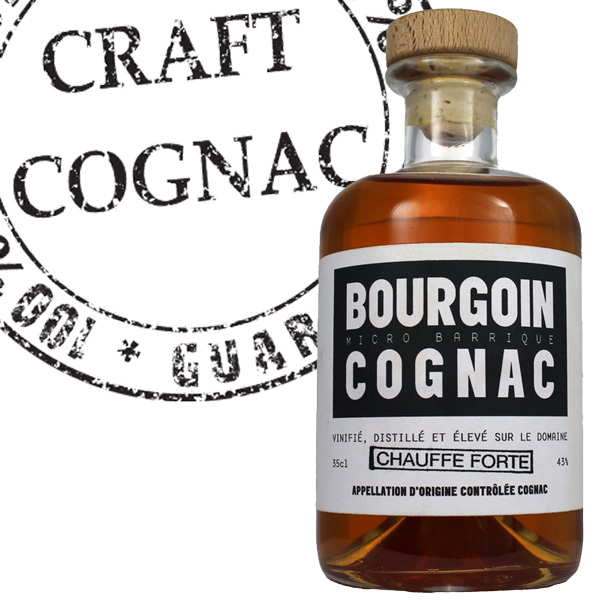
In our opinion, the meaning of a true craft cognac is one that’s..
– created by small & artisan producers
– in small batches, keyword: limited editions!
– using superior ingredients, possibly using organic and/or traditional farming & production methods (but certainly not industrial)
– and perhaps one where the producer carries out the whole process from start to finish. In other words, from the vine to the bottle.
– last but not least a certain ‘craft-design’, as unprofessional & home-made as possible
And it goes without saying that those who create craft cognacs have a pure love and passion for their task. We particularly like the term used by Braastad Cognac to define their craft:
“The difference between a craftsman and a robot: A robot will try to make it exactly like before. A good craftsman will try to make it better”.
As mentioned above, Guy Pinard is another producer who, way before craft became a buzzword, has been creating their cognac in a truly ‘craft’ manner. The pioneer of organic cognac production, this was the first house to use totally organic methods – and that was decades ago, back in 1969.
There are many other small, artisan cognac houses that might not yet have started to use the word craft to describe their products, but are the epitomy of the word. And in many cases they might be names that are new to you – simply because they are small, family run concerns that don’t have the mighty advertising power of the giants such as Hennessy, Courvoisier, Remy Martin, and Martell.
What are some good craft cognacs?
So, we mentioned a few examples of houses that produce cognacs in a way that can be determined as craft. But let’s take a look at what, in our humble opinion, we consider to be some of the very best bottles of craft cognac on the market today.
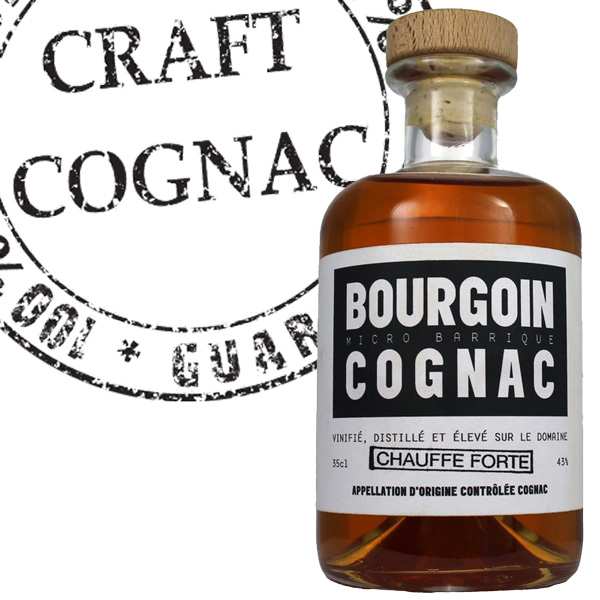
– We must mention Bourgoin Cognac. The bourgoin family with the sub line of “Micro Barrique”. Sign up for this one and receive an alert once the bottle is available.
– The Pure & Rustic line by Bache Gabrielsen is very, very craft. Especially recently released taste-set
– All Guy Pinard products especially Folle Blanche Cognac
– Frapin would be perhaps debatable but I think at least their Multimillésime Cognacs are totally ‘craft’
– And I made a list of all more or less crafty cognacs that are in stock
Any thoughts? Let us know.
Related products

Get articles like these and more:
Subscribe to our mailing list


1 Comment
Craft Cognac is the future of the Cognac !